

The Future of Automation: Why Electric Valves Are Here to Stay
- 2025-12-22 12:00:00
- admin
- NO COMMENTS
The Future of Automation: Why Electric Valves Are Here to Stay
A chemical plant’s high-temperature steam pipeline rattles slightly as a massive valve begins to close. In the control room, an engineer watches a pressure gauge oscillate by a few psi before stabilizing. Meanwhile, out on the piping, a faint hiss of escaping steam draws another engineer’s attention – a telltale wispy cloud near a valve packing. These are everyday scenes in industrial facilities. Valves are the hardworking sentinels of fluid control, and even minor issues like a slow-responding actuator or a small leak around a stem can have a cause-and-effect chain: steam temperature cycles lead to seal fatigue, which results in an unplanned little leak requiring maintenance. In many field operations, engineers often notice such subtle signals during routine inspections. During one startup, for example, a senior engineer felt an electric valve’s actuator housing becoming warmer than usual – a sign the motor was straining (perhaps a hint that the valve’s torque demand had increased). Each observation is a clue in the ongoing quest for more reliable and precise flow control.


Engineers on site know the pattern: pressure fluctuations can make a valve micro-vibrate, gradually wearing down its seat, which in turn delays its full shut-off response. Or consider a corrosive chemical line: if the valve body material isn’t up to the task (say, standard carbon steel used where 316L stainless steel or Duplex alloy was needed), the fluid can attack it. Over months, the corrosive medium → material mismatch → pitting corrosion on the internal walls → a shorter service life and risk of failure. Such problems used to be all too common with older valves and actuators. Today, however, the industry is embracing advanced solutions to break these chains. One technology in particular stands out in this future of automation: the electric valve. What exactly are electric valves, and why are they proving to be indispensable? Let’s dive in from an engineer’s perspective.
Understanding Electric Valves
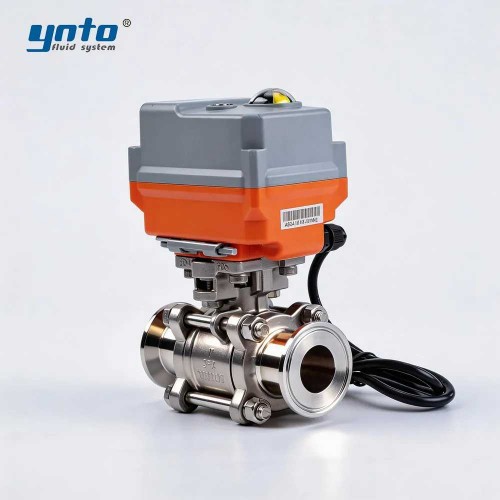
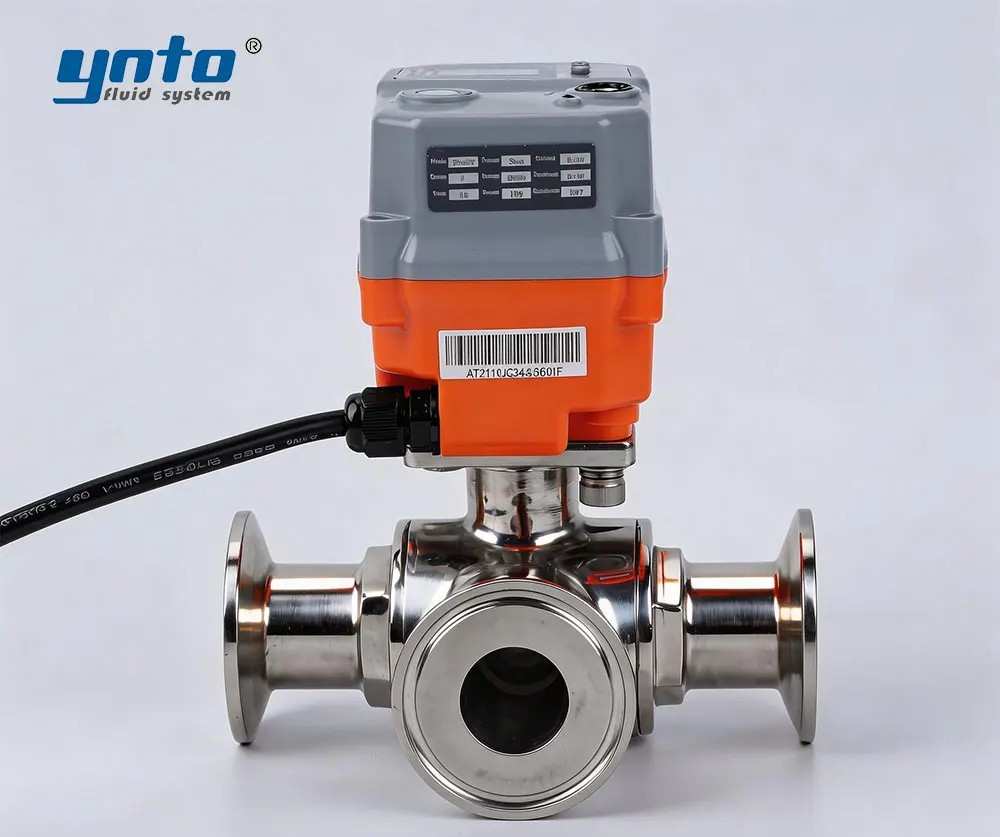
For engineers working on modern automation projects, an electric valve refers to any valve equipped with an electric actuator instead of a manual handle or pneumatic piston. In practical terms, this means a valve (it could be a ball, gate, globe, or other type) that is opened and closed by an electric motor-driven mechanism. Picture a ball valve on a high-pressure line: rather than a technician turning a wheel, a compact motor and gearbox assembly rotates the ball with precision. With a control valve application, a modulating electric actuator can adjust the opening incrementally, responding to a 4-20 mA or digital control signal just like a traditional pneumatic control valve would – but using electrons instead of air pressure.

From the outside, electric valves have a somewhat bulkier top end – the actuator housing – often with status lights, wiring, and sometimes manual override levers. Inside that housing is a network of components working together: an electric motor (AC or DC, sometimes stepper or servo for fine control), gearing to amplify torque, limit switches or encoders to provide feedback on position, and a built-in controller or circuit board to interface with control systems. Many electric valve actuators are designed following international standards. For example, a typical unit might conform to ISO 5211 for its mounting interface, allowing it to bolt onto various valve bodies interchangeably. Likewise, the valve itself is usually built to ANSI/ASME and API standards – ensuring it meets defined pressure ratings and performance tests. ANSI pressure classes (e.g. Class 150, 300, 600) specify the maximum pressures a valve can handle at given temperatures. API specifications (such as API 598 for leak testing or API 6D for pipeline valves) lay out strict testing requirements to guarantee that even an automated electric valve will seal and hold pressure reliably under real-world conditions.
Types of Electric Valves
Electric valves come in several flavors, tailored to different needs. One common variety is the electric solenoid valve, a compact on/off valve that uses an electromagnetic coil to actuate a plunger. Solenoid valves are typically used for smaller flow lines or gases – for example, quickly shutting off a fuel gas line or controlling water flow in an HVAC system. They excel at rapid actuation (often opening or closing in a fraction of a second) but are usually either fully open or fully closed, not for fine throttling. On the other end, we have motor-driven valves like the electric ball valve. An electric ball valve uses a motor to rotate a ball with an orifice: when the orifice aligns with the pipeline, fluid flows; a 90-degree turn shuts it off. These are popular in industrial automation because they can handle larger flows and higher pressures than tiny solenoids, and with the right motor control they can modulate flow as well. There are also electric butterfly valves (flat disk rotated by an actuator), electric gate valves (multi-turn actuators lifting a gate), and even electric diaphragm valves for specialty applications like food and pharmaceutical CIP lines. In fact, even niche applications are adopting electric actuation – think of electric exhaust valves in automotive systems that adjust engine backpressure or sound on the fly. In all cases, the core idea is the same: an electric power source drives the motion instead of manual labor or pressurized air/fluid.


Key Components: Electric Actuators
The defining element of an electric valve is, of course, the electric actuator. This is essentially the muscle that converts electrical energy into mechanical motion. Most electric actuators consist of an electric motor coupled with a gearbox. When a control signal is sent, the motor spins and the gearbox multiplies the torque to a level sufficient to rotate or push the valve mechanism. Because of the gearing, electric actuators can generate considerable force – enough to crank open a large gate valve against high pressure, or finely throttle a flow in a diaphragm valve without overshooting.
Modern electric actuators are far more than just a motor and gears. Engineers have integrated smart features: torque sensors that cut power if something jams (preventing motor burn-out), position feedback via encoders or potentiometers that tell the control system exactly how far the valve has opened, and even on-board diagnostics. Many units now include digital controllers; you can program travel limits, speeds, or receive alarms if the valve is stuck or the actuator draws too much current. For example, if a valve starts to require more torque due to fouling or deposit buildup, a smart actuator might alert maintenance crews before the valve actually seizes.


Crucially, electric actuators can be designed for the environment they operate in. Need to install a valve in a Class I Division 1 hazardous gas area? Explosion-proof electric actuators (built to ATEX or UL standards) are available, with sealed enclosures that won’t ignite a surrounding gas atmosphere. Extreme cold or heat? Actuators can be fitted with internal heaters or cooling fans, and constructed with high-temperature alloys or robust seals (FKM O-rings for heat, EPDM for cold, etc.) to endure the elements. The marriage of proper materials and design is important here: for instance, an actuator on a high-temperature steam line might use an alloy steel housing and high-temp grease to survive 200°C ambient conditions, whereas a food-grade actuator in a washdown area will favor 316L stainless steel externals and PTFE seals to resist corrosion and allow easy cleaning. The key takeaway is that the electric actuator brings precision and flexibility, but it must be specified correctly – matching the valve type, the torque required, and the environment – to truly shine.
Advantages of Electric Valves
Why are electric valves gaining ground in automation? Simply put, they address many of the shortcomings of older actuation methods and open up new possibilities for control. Engineers who have worked with traditional pneumatic valves are familiar with their quirks: compressors running constantly to supply air, pressure drops causing slow response, springs and diaphragms needing regular tune-ups, and that occasional pssshh of air that signals wasted energy (and money). Electric valves turn many of those inconveniences into non-issues. Let’s explore the key advantages of adopting electric valves in modern systems:
Enhanced Control and Precision
In terms of control performance, electric valves offer pinpoint precision that’s hard to beat. Because an electric actuator’s movement can be finely regulated by voltage or current, we can achieve very smooth control of a valve position. For example, imagine trying to maintain a certain flow rate in a reaction vessel jacket: a traditional pneumatic control valve might overshoot or hunt around the setpoint if the air pressure control isn’t tuned perfectly (air is compressible and introduces a lag). In contrast, an electric valve actuator responds directly to digital commands with accurate positioning, reducing those oscillations. The result is a steadier process variable and less wear-and-tear from constant adjustments. In many field operations, switching to electric actuation has eliminated the small cyclic vibrations that engineers used to observe at low flow rates – vibrations that, over years, could cause valve stem wear or loosening of fasteners. By minimizing such effects, electric valves can actually extend the maintenance intervals of the equipment they’re controlling.


Another facet of precision is multi-turn and multi-position control. Electric actuators don’t just do open/close; they can stop at any intermediate point with repeatability. If a process requires a valve to frequently move to, say, 37% open, an electric control valve can do that all day with minimal drift. This is particularly useful in complex automated sequences or recipes, where each step might need a different flow setting. The high positioning accuracy and repeatability come from the combination of motor and feedback – many electric actuators use encoders to track position down to tiny increments. Engineers appreciate this when tuning a system: it’s easier to get that “sweet spot” flow coefficient when the actuator doesn’t overshoot by even a degree. The resolution and accuracy of electric valves make them ideal for critical dosing, blending, or any application where precise fluid metering is required.
From a systems integration perspective, electric valves also simplify control topology. They interface digitally – you can network them via protocols (Modbus, Foundation Fieldbus, Industrial Ethernet, etc.), meaning the valve can be both controlled and monitored in real-time from a central control system. For instance, a SCADA system can read back the exact valve position and even actuator motor temperature. This level of insight was harder to get with older systems – often requiring separate positioners or transmitters on pneumatic setups. Overall, the electric valve’s precision and rich feedback contribute to tighter process control and improved product quality.
Energy Efficiency and Cost Savings
Every engineer and plant manager today is mindful of energy costs and sustainability. Here’s a striking fact: pneumatic valve actuators typically operate at only 10–15% efficiency, because a lot of energy is lost continuously compressing air and bleeding it off. Electric actuators, by comparison, can be 70–90% efficient at converting electrical energy into mechanical work. This huge efficiency gap means that replacing a pneumatic system with electric actuators can dramatically cut the energy usage of a plant’s utility systems. Consider a facility that has a big instrument air compressor running 24/7 just to supply dozens of control valves – that’s a constant draw of power (and a source of heat, noise, and maintenance). Electric valves only draw power when they move, and even then, only the amount needed to perform the work. There’s no continuous energy bleed. In fact, electric actuators can start and stop on command without needing a standby power like pressurized air – eliminating the need for always-on compressors and saving businesses a lot on energy bills. The cost savings are twofold: lower electricity usage and reduced maintenance on compressor equipment (fewer oil changes, filter replacements, etc.).
There’s also a safety and environmental dimension to this efficiency. Leaking pneumatic lines not only waste energy but can introduce oil mist or other contaminants into the environment. Electric valves, being a closed system, avoid that. Many companies now have sustainability goals that include reducing compressed air usage (since compressed air is notoriously one of the most expensive utilities per unit energy). By converting to electric actuation, some plants have reported lower carbon footprints – essentially because the power they use is far less and can come from cleaner sources. It’s a clear win: improved efficiency leads to cost savings and greener operations.


Upfront, it’s true that electric actuators often cost more to purchase than a simple pneumatic cylinder and positioner. However, when engineers perform a lifecycle cost analysis, the ROI often favors electric valves. The ongoing operating expense is so much lower that the initial investment pays back, sometimes in just a couple of years, through energy savings alone. Additionally, downtime costs money – and electric valves can reduce downtime. They have fewer moving seals and don’t depend on a complex support system of compressors, dryers, and regulators that might fail. The reduced maintenance needs (no airlines to leak, no diaphragm to crack) mean fewer production interruptions. In one real-world scenario, a water treatment plant swapped out several air-actuated valves on a continuous process with electric ones. They found that not only did their power consumption drop, but the flow control was smoother, which reduced pump strain and saved on pumping energy too – a cascading benefit. Stories like this underscore why the industry views electric valves as a cost-efficient choice in the long run.
Market Trends Driving Electric Valve Adoption
The shift toward electric valves isn’t happening in isolation – it’s part of a broader wave of technological advancement in industry. Several market trends are propelling the adoption of electric valve technology, effectively ensuring that these devices will remain central in the automated future. Let’s highlight a couple of the biggest drivers:
Growth in Industrial Automation
Across the globe, industries are automating more processes than ever. From manufacturing lines to municipal utilities, the push is on for greater efficiency, reliability, and remote operation. Valves and actuators, being the physical interface between digital control systems and the flow of real fluids, are getting a lot of attention (and investment). Recent market research indicates that the global valves and actuators market is steadily growing as we approach the late 2020s. In particular, the segment for electric valve actuators is seeing robust demand, with multi-billion dollar yearly sales and a clear upward trend. Industries like oil & gas, power generation, chemical processing, and water treatment are leading this charge. Why? They need reliable flow control in increasingly challenging environments, and they need it to be as automated as possible.
Oil and gas, for example, is expanding into remote and harsh locations (deep offshore, or shale fields spread over miles). Using pneumatic actuators in these settings can be impractical – imagine having to run instrument air lines over a remote desert pipeline, or the risk of a compressor outage on an unmanned offshore platform. Electric valves shine here: run a power cable and control wire (or fiber, or even solar power and wireless control for remote wellheads), and you have a self-contained, automated valve that doesn’t need a local air supply. Companies in the sector have recognized the value of electric actuators that can deliver precise modulation and then hold a valve position steady without consuming energy (something air actuators can’t do without drifting). Moreover, stringent safety and environmental regulations encourage technologies that minimize leak points and emissions – electric actuators produce no exhaust and can be sealed tight, aligning with these goals.
In manufacturing and processing plants, the trend is similar. Industry 4.0 principles emphasize connectivity and data. Every valve is not just a mechanical device but a potential data source and control node in a smart factory. As plants invest in modernizing, many are phasing out older pneumatic control loops and installing digitally networked electric valves that can be finely controlled from a central hub (or even cloud-based supervisory systems). The flexibility is notable too: need to reconfigure a production line for a different product? Electric valves can often be reprogrammed or repositioned via software changes, whereas re-routing air lines or installing new pneumatic hardware would be a more involved task. This agility in automation design is a strong incentive for factories to choose electric solutions from the get-go. The result is that the market keeps expanding, and manufacturers of valves are pouring R&D efforts into electric actuator innovations, knowing the demand is there.
Shift to Smart Technologies
Another major trend is the rise of smart valves and the general integration of IoT (Internet of Things) in industrial equipment. Electric valves are at the forefront of this shift because they naturally lend themselves to digital technology integration. Unlike a basic manual valve or a pneumatically actuated valve (which typically needs external positioners and transducers to communicate with digital systems), an electric valve can be a plug-and-play smart device. Many come with built-in microprocessors and communication modules. This means a few important things: remote monitoring, diagnostics, and control are all much easier.


In many field operations today, engineers can monitor valves from miles away. For example, a water utility might have a network of pumping stations across a city – each station’s valves feed data to a central control center. If one valve’s actuator reports a high motor current draw, the maintenance team knows that valve is beginning to stick and can schedule a fix before it fails. Some electric actuators even log their own performance over time, basically performing condition-based monitoring. This plays perfectly into the predictive maintenance strategies that companies are adopting to avoid unplanned downtime. The valve becomes a smart asset that not only does its primary job (controlling flow) but also reports on its health and the conditions it sees (like how many cycles it has done, or if there were any instances it had to exert unusually high torque).
Wireless connectivity is also emerging for valve control. In some installations, running wires is costly or impossible – think of a tank farm or an underground distribution node. New electric valve actuators can be outfitted with wireless transceivers, allowing them to receive commands and send status over radio networks. This increases flexibility in retrofitting older plants: you don’t need to lay hundreds of meters of new cable to add an automated valve in an existing line – a battery-powered or solar-powered wireless electric valve can be dropped in place with minimal infrastructure changes. It’s important to note, the power consumption of these actuators has to be low for that to work (and indeed, the industry has developed more efficient motors and power management for exactly this purpose).
In short, electric valves are a natural fit for the smart factory and IIoT (Industrial Internet of Things) era. They act as both actuators and sensors. Consider the data points an electric valve might provide: position, temperature, supply voltage, torque usage, number of cycles, and even vibration if it has accelerometers. All of these can feed into big data analytics to optimize plant performance. Pneumatic valves by comparison are relatively “dumb” – they might give you an open/closed indication, but not much else without extra instrumentation. The ongoing shift in technology is clearly toward systems that can do more with less human intervention, and electric valves are key enablers of that vision. As this trend continues, we’ll likely see even smarter electric valves with features like self-calibration, auto-tuning to process conditions, and seamless integration with advanced control algorithms. It’s an exciting time for what used to be simple mechanical devices – they are now an integral part of the digital ecosystem in automation.
Challenges Facing Electric Valves
With all their benefits, one might think electric valves are a silver bullet for automation. However, no technology is without challenges. It’s important to acknowledge the common issues and limitations engineers may encounter with electric valves, and how the industry is addressing these. Experienced engineers approach electric valve projects with both enthusiasm for the benefits and caution for the pitfalls. Let’s look at a few challenges and their implications:
Common Issues and Troubleshooting
One of the most common issues with electric valves lies in the actuator sizing and selection. In practice, if an electric actuator is undersized for the valve load, it will struggle or fail to perform. This might manifest as the valve not reaching its fully open or closed position, or the actuator’s internal overload protection tripping frequently. For instance, imagine a large diameter butterfly valve in a pipeline – if the engineer selected an actuator rated for, say, 100 Nm torque but the valve requires 150 Nm to overcome the differential pressure at shutoff, the result will be a valve that only cracks open and then stalls. Field engineers often discover this during commissioning when a valve stops moving mid-travel. The troubleshooting path usually leads to either upgrading to a larger actuator or reducing the system pressure. It’s a reminder that proper engineering calculations upfront are vital: factoring in not just the valve’s requirements under ideal conditions, but also worst-case scenarios (like a valve that hasn’t cycled in months and has higher static friction, or a higher fluid pressure than expected).
Another frequent issue is electrical reliability. Electric actuators have motors, circuit boards, wiring – components that can fail if not protected. A common troubleshooting scenario: a valve that was working fine is suddenly unresponsive. An inspection might reveal a blown fuse, a tripped motor thermal cutoff, or water ingress in the actuator’s junction box causing a short. Unlike pneumatic actuators which are somewhat simpler (mainly mechanical aside from a positioner), electric units require careful attention to electrical installation and environmental sealing. Engineers in the field know to check the basics first: Is the power supply stable and on the correct voltage? Are the control signals reaching the actuator’s controller? Sometimes the fix is as simple as a loose wiring connector – other times it’s more involved, like replacing a burned-out motor due to overwork.

Valve mechanical wear still happens with electric valves too. The actuator might be strong enough, but if the valve internals (seat, stem, seals) are worn or damaged, the assembly will have issues. A classic case is a valve that starts leaking despite the actuator indicating it’s fully closed. If the soft seal (say a PTFE seat or an EPDM gasket) has worn out or hardened over time (perhaps due to high temperature exposure beyond its rating), the actuator can no longer compress it enough to seal. The result is a persistent drip or a whistling leak past the closure. In one scenario, a facility noticed an electric steam valve passing a small amount of steam when it should be shut – the cause was traced to thermal cycling having embrittled the Teflon seat. The electric actuator was doing its job, but the valve needed a new seat material (in this case, upgrading to a graphite composite seal solved the issue for high-temperature service). Troubleshooting leaks involves examining both the actuator operation and the valve body – often, tightening bolts or replacing seals is necessary, and it’s certainly easier to catch these issues if the actuator provides a torque/position alarm (some advanced models can detect if they reach the closed position too early, indicating a possible obstruction or worn seal).
Other issues include heat and duty cycle constraints. Electric actuators can overheat if they are operated too frequently without enough cooldown time. An engineer might encounter an actuator that just stops moving after a period of rapid cycling – what likely happened is the motor’s thermal protector kicked in. The solution could be to use an actuator rated for continuous duty or add a cooling mechanism, or simply to reconfigure the process to give the poor device a breather between strokes. In contrast, pneumatic actuators don’t overheat (though compressors can). So, it’s a different mindset: you pay attention to things like duty cycle ratings and service factors for electric units. If an actuator is routinely operating at the edge of its capability, it’s a sign it should be upsized or a second actuator should share the load (in large damper valves, sometimes two actuators are mounted for this reason).
Lastly, there’s the challenge of power failure. A pneumatic spring-return valve will fail to a safe position when air is lost; an electric valve, however, will just stay put (unless it has special fail-safe provisions). During plant upsets or blackouts, this can be a serious issue. Engineers mitigate it by specifying fail-safe electric actuators (which often have a built-in mechanical spring or a charged capacitor to move the valve upon loss of power) or by ensuring critical valves have backup power (like UPS or generator supply). Troubleshooting a failure may reveal that an important valve didn’t move to safe position because its battery backup was drained or missing – a scenario that underscores the need for regular testing of those backup systems.
In summary, troubleshooting electric valves is a multidisciplinary exercise: electrical, mechanical, and sometimes even software (for those smart actuators) all come into play. Companies often develop checklists for maintenance: check power and fuses, test the actuator manually, inspect the valve for obstruction or debris, verify no over-torque events in logs, etc. The good news is that as the technology matures, modern electric valves are more robust and user-friendly – many will self-diagnose and flash an error code if something is off. And each challenge is well-understood, with established solutions that engineers have honed through years of field experience.

Technological Limitations and Solutions
While electric valves are clearly here to stay, current technology does have its limitations. Recognizing these is important to applying the right solutions and continuing to improve the designs. One limitation often cited is their reliance on electrical power – if you don’t have electricity, you can’t move the valve. In remote areas or during emergency shutdowns when power is cut, this could be problematic. However, the industry has introduced clever solutions: fail-safe actuators with spring return mechanisms or stored energy. These devices include a spring or hydraulic accumulator that is wound or charged during normal operation; if power is lost, the stored energy releases and drives the valve to a predetermined safe position (open or closed). Another approach is integrating backup power sources like supercapacitors or battery packs inside the actuator. These can provide enough juice for one full stroke after external power is lost. Technologically, these add complexity and cost, but they address the fail-safe requirement. We’re also seeing hybrid approaches – for example, an electric actuator with a pneumatic or hydraulic override, combining the strengths of each in critical applications.
Speed is another consideration. Electric actuators, especially on large valves, tend to operate slower than pneumatics. If you need to close a valve in under a second (for a slam-shut safety application, for instance), a solenoid or spring pneumatic valve might still be the go-to. Electric motors can only accelerate so fast, and the inertia of the mechanism can limit speed. To solve this, manufacturers have been experimenting with high-speed motors, different gear ratios, or smaller quarter-turn actuators that can snap a valve shut quickly. It’s a trade-off: a high-speed closing might sacrifice some precision or cause mechanical stress (water hammer in pipes, etc.). So, engineers decide based on the application – many process operations are fine with a valve taking 5, 10, or even 30 seconds to close, and that’s well within electric actuator capabilities. For those that aren’t, the solution might be a dedicated safety shutoff valve in parallel using a different technology, while the electric valve handles normal modulation.
Environmental limitations are also being tackled. Standard electric actuators might have trouble in extreme temperatures – say, Antarctic cold or desert heat. The solution has been better materials and design: arctic-rated actuators with internal heaters and low-temperature lubricants for the cold, and high-temp rated coils and insulation for heat. Explosion-proof requirements, as mentioned, have largely been solved by robust enclosure designs that meet international standards (like ATEX, IECEx, UL certifications). There was a time when one wouldn’t dare put an electric device near flammable gas – now it’s routine, thanks to these engineered solutions that prevent any spark from escaping the housing. Compliance with these standards is key: manufacturers test their electric valves to meet API and ISO test criteria, proving they can handle overloads, survive fire exposure (API fire-safe tests will literally torch a valve to ensure it doesn’t leak excessively), and maintain integrity under pressure. Following standards ensures new technology doesn’t compromise on the basic safety and reliability that industry demands. For example, API 6D and ISO 14313 require high-pressure shell tests and low-pressure seat leakage tests – electric valve assemblies are put through the same paces to certify that they seal as well as any conventional valve. The fact that electric valves can meet the same ANSI/API specifications as older valves gives engineers confidence to use them in critical applications.


One limitation that is more of a practical hurdle is cost and complexity. An electric valve has more parts and a higher upfront cost, as we discussed. The solution here is partly economic (as volume increases, prices are gradually coming down) and partly value-based: users are learning to justify the cost through the benefits gained. Additionally, manufacturers are simplifying the installation and calibration processes. Many electric actuators now come pre-configured or with auto-calibration features – so you don’t need an army of specialists to set them up. The ease-of-use improvements are reducing the “complexity barrier” that some older plants worried about. It’s similar to how early computers were expensive and complex, but over time they became affordable and user-friendly – we see a parallel with electric actuation tech.
Finally, there’s the human factor: a generation of plant technicians who are intimately familiar with pneumatics may have a knowledge gap when it comes to troubleshooting an electric actuator’s circuit board or firmware. The industry is addressing this with training and documentation. Many suppliers offer training programs, and some actuators even have built-in web servers now – you can plug in a laptop and see a user-friendly interface to configure and diagnose them. Solutions like these aim to make the technology accessible and reduce the intimidation factor. After all, the best technology in the world is only as good as our ability to use it effectively. The trajectory suggests these limitations are being steadily overcome, making electric valves more robust and easier to adopt each year.
Conclusion
Future Outlook for Electric Valves
Looking ahead, electric valves are poised to become even more entrenched in automated systems – not because of hype, but because of proven performance and continuous innovation. The future of electric valves is one of greater intelligence, integration, and reliability. We can expect to see actuators that are smaller and lighter yet more powerful, thanks to advancements in motor materials (for instance, high-torque density motors) and power electronics. Smart actuator technology will likely standardize, meaning even basic models might come with on-board diagnostics and perhaps AI-driven features. Imagine an electric valve that can not only tell you it’s wearing out, but can adjust its operation pattern to compensate or extend its life, or one that automatically syncs with other valves to optimize an entire network’s flow dynamics – these things may sound futuristic, but in rudimentary forms they are already under development.
In the context of Industry 4.0 and beyond, electric valves will probably play a role in self-optimizing plants. With so much data available from each valve, advanced control algorithms could adjust operations in real-time. For example, a future plant could have valves that coordinate: if a pump ramps up, the valves downstream might automatically tweak positions to balance the surge, all without direct human intervention. The electric actuators, being fully digital, would be the executors of those intelligent commands. This level of coordination is difficult with pneumatically actuated systems due to their slower feedback and response. So, electric valves open the door to true adaptive control in fluid systems.
Another likely development: energy harvesting or ultra-efficient electric valves that can run on minimal power. There’s ongoing research into actuators that could even scavenge energy from flow or vibration, potentially powering themselves (this could be revolutionary for remote pipeline valves where changing batteries or running power lines is a huge pain). Also, look out for integration of new materials: we might see wider use of advanced composites or smart materials in valve construction. Perhaps the valve seal of tomorrow dynamically adjusts its profile based on pressure to improve sealing, actuated by a tiny electric signal – who knows? What we do know is that the core advantages of electric valves – precision, control, and connectivity – align perfectly with where industry is headed.
In terms of market outlook, all signs point to continued growth. As sustainability pressures mount, industries will favor electric actuation for its efficiency and lower emissions. Regulators might even start encouraging or mandating more energy-efficient actuation solutions in certain sectors. We’ve already seen a shift in some regions to phase out older, leak-prone pneumatic controls in favor of cleaner alternatives. By future dates like 2030 or 2040, it wouldn’t be surprising if the default assumption in design offices is that valves will be electric by default, with other options only by exception. The confidence in the technology has grown year by year, bolstered by successful implementations in critical applications (from subsea oil wells to aerospace fuel systems, electric valves have proven themselves).
Call to Action: Embrace Electric Valve Technologies
For engineers, plant managers, and industry leaders reading this: the era of electric valves isn’t some distant vision – it’s here now, and it’s time to embrace it. If you’re looking at your facility’s P&IDs and still seeing a tangle of instrument air lines and wondering about frequent manual interventions, consider what modern electric valves could do for your operation. Adopting electric valve technology can address many of the chronic issues that have long plagued fluid handling systems. Problems like inconsistent control, high utility costs from air compressors, or difficulty obtaining performance data from the field can be significantly reduced by switching to electric actuation. By upgrading a few critical valves to smart electric units, you might immediately notice more stable control of that troublesome reactor temperature, or get an alert from a valve before it sticks and causes an unplanned outage.
Of course, transitioning technologies should be done with due diligence – evaluate which valves in your process would benefit most (start with ones that require precision or are in remote/hazardous areas). Consult with valve specialists and consider reputable suppliers whose products meet ANSI/API standards and ISO certifications so you get the safety and reliability assurances. Many manufacturers offer drop-in replacement electric actuators for existing valve bodies – so you might not even need to replace the valve itself, just swap the actuator from pneumatic to electric. It can be more straightforward than you expect.
In the end, embracing electric valve technologies is about staying ahead. Industries are getting more competitive, and the ones who effectively leverage automation have a clear edge. Just as electronic controls have overtaken older relay logic in control rooms, electric valves are overtaking older actuation in the field. The benefits – from enhanced safety (no burst air lines), to easier compliance with environmental norms (no fugitive emissions from actuators), to better product quality through fine control – all translate to a stronger bottom line and a more sustainable operation.
So, if you haven’t already, start the conversation in your team about where electric actuators and advanced valve solutions could fit into your processes. Pilot an installation, gather data, and see the difference. The future of automation is calling, and it’s powered by efficient, precise electric valves. Those who answer that call will find themselves with safer, smarter, and more productive systems – truly a step ahead in the flow control game. Now is the time to embrace these technologies and secure the advantages they offer for years to come.


- 2026-10-09 14:26:55
.png?imageMogr2/format/webp)
- 2026-09-30 08:25:23
- 2026-09-28 10:28:43