

The Essential Guide to High-Temperature Resistant Valves for Food Industry Applications
- 2026-08-07 11:45:11
- admin
- NO COMMENTS
The Essential Guide to High-Temperature Resistant Valves for Food Industry Applications
Walk through a real food plant during a CIP changeover, and the pressure of the job becomes obvious very quickly. A sauce line has just finished a hot run, steam is being introduced for sanitization, and operators are watching the transition from product to cleaning media. This is the point where engineers most often see trouble begin. A valve that moved smoothly at start-up now closes more slowly. A seat that looked fine last month starts showing a faint wet trace after repeated thermal shock. On some lines, the first warning is not a visible leak at all, but a drifting temperature profile downstream because the valve is no longer shutting off as tightly as the process assumes it does. Those are not cosmetic issues in food production; they sit right on the boundary between product quality, sanitation, and lost uptime. FDA rules require food-contact surfaces to be corrosion-resistant, cleanable, and able to withstand both the intended environment and cleaning compounds, while instruments used to regulate temperature must remain accurate and adequately maintained. Hygienic design standards from 3-A add the practical design layer: smooth surfaces, drainability, cleanable joints, and seals that do not create hidden retention points.
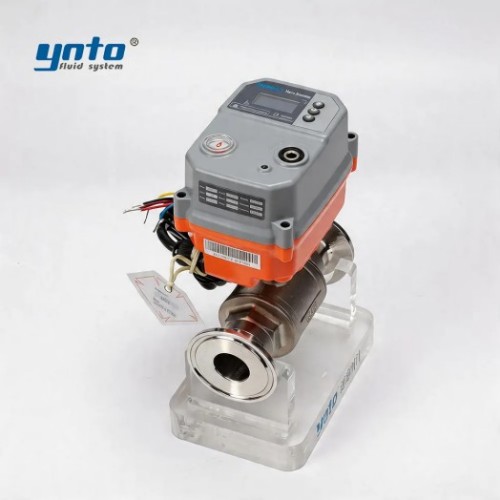
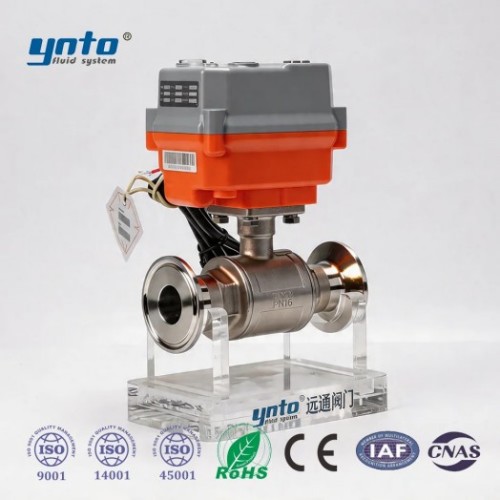
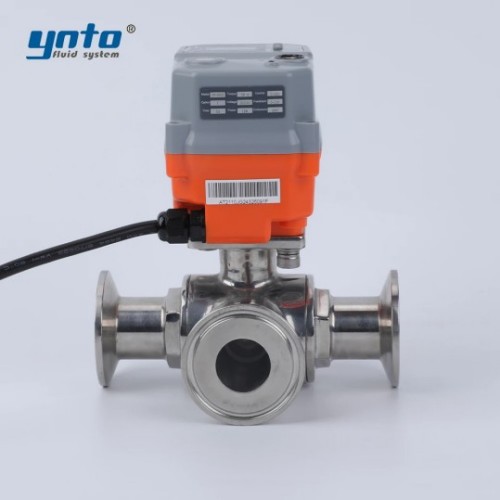
High-temperature resistant valves matter because food plants rarely operate at one gentle condition. FDA’s food-contact guidance explicitly recognizes conditions such as heat sterilization above 212°F, hot filling or pasteurization above 150°F, and cooking above 250°F. In dairy processing, FDA inspection guidance lists pasteurization conditions ranging from 72°C for 15 seconds to 100°C for 0.01 second depending on product and process. In other words, the thermal cycling is real, repeated, and process-critical. A high-temperature valve is not simply “a stronger valve.” It is a valve whose body material, seat, seal set, surface finish, and actuator arrangement remain stable through those thermal swings without turning cleanability or shutoff integrity into a recurring maintenance problem. A practical example is an electric 316L clamp ball valve, which CNYNTO specifies for hygienic, high-purity service with tri-clamp connections and CIP/SIP compatibility.
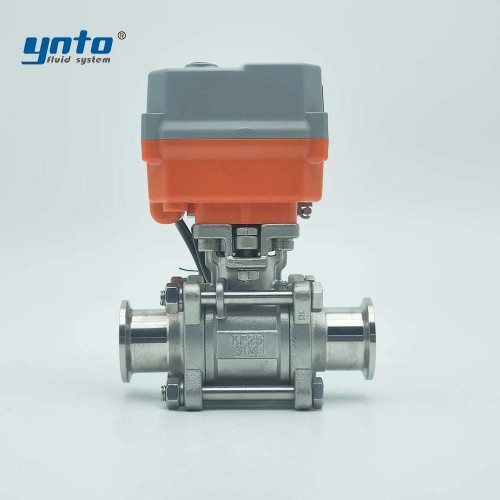
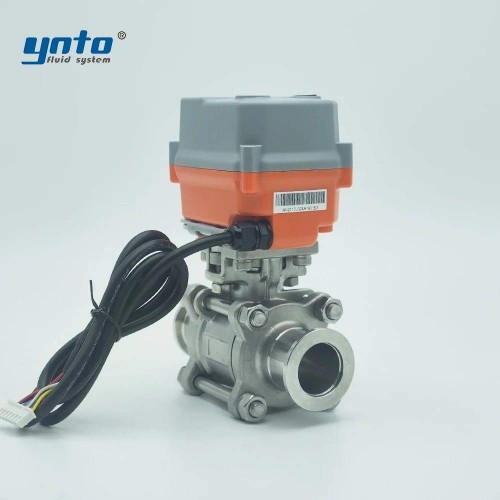
Understanding High-Temperature Resistant Valves
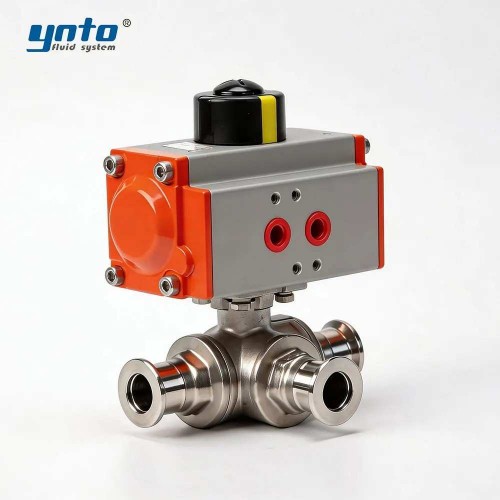
From an engineering perspective, the difference between a high-temperature resistant valve and a standard utility valve usually appears in three places: the wetted metal, the sealing system, and the geometry of the product-contact area. Standard valves can often survive warm water or intermittent washdown. They do not always stay dimensionally predictable when exposed to hot products, hot caustic, rinse cycles, and sterilization steam over time. That is why sanitary service frequently shifts toward 316L stainless steel, polished internal surfaces, clamp connections, and seal materials selected for both chemistry and temperature rather than price alone. CNYNTO’s electric 316 stainless steel three-way clamp ball valve, for example, is built around 316/316L stainless steel, tri-clamp sanitary connections, and declared compatibility with CIP/SIP protocols, while its published temperature range extends to 232°C in specified configurations.
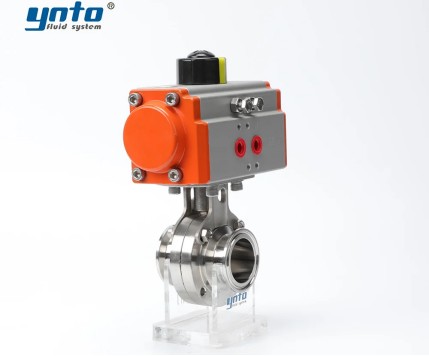
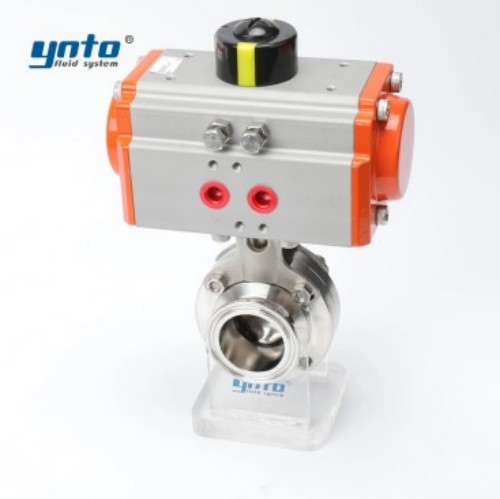
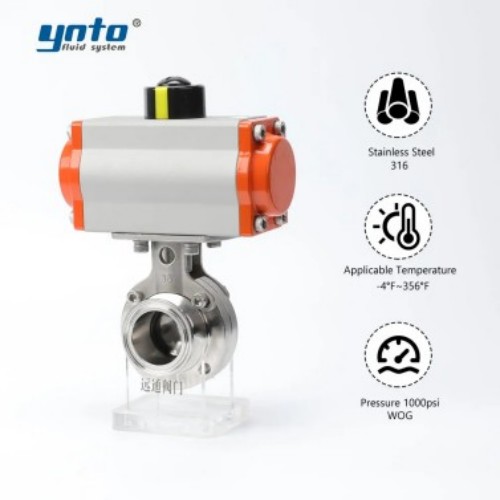
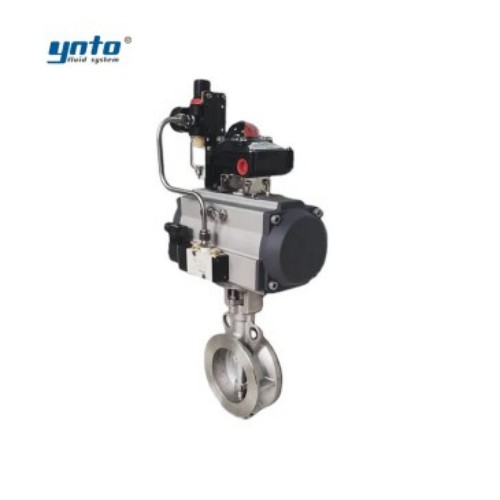
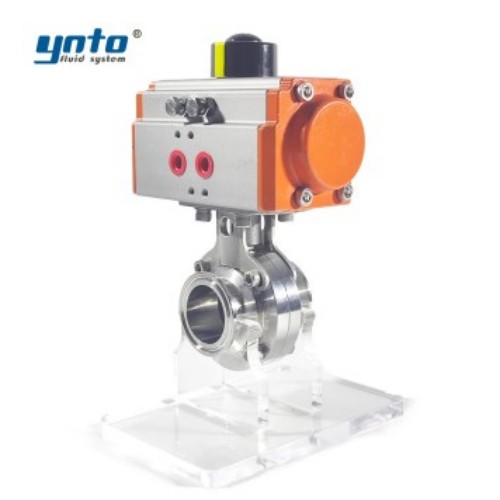
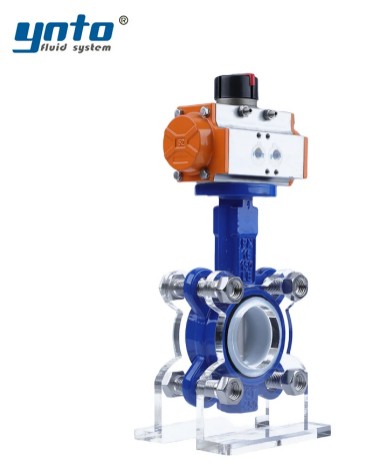
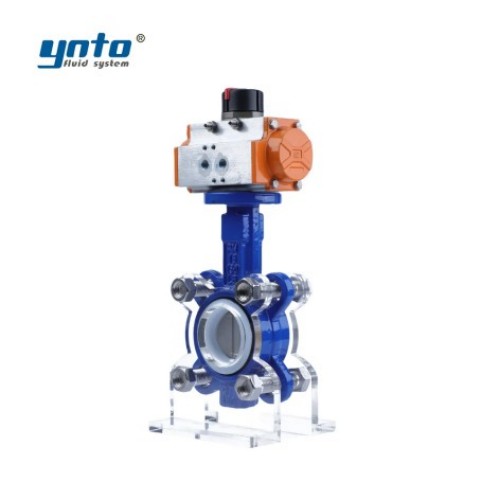
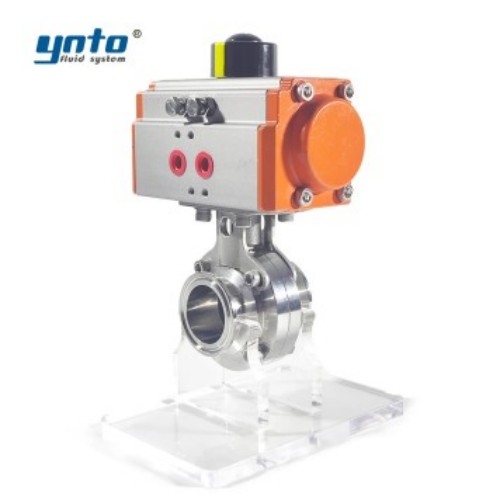
The failure pattern is familiar on site. Severe thermal cycling leads to seal compression loss, seal compression loss weakens shutoff, and weakened shutoff creates small bypass flow that the operator may not notice until temperature control starts drifting. In other words, pressure fluctuation causes micro-vibration at the plug, ball, or disc. That vibration turns into years of localized wear, and the wear finally shows up as delayed response or abnormal torque. Engineers usually describe this in plain terms: the valve begins to feel “heavier” than before. Not seized, just no longer clean in its movement. When that happens on a hygienic line, the valve is already affecting production even if it has not yet failed completely. Hygienic butterfly designs can reduce downtime because they combine low operating torque with fast disassembly and polished surfaces. CNYNTO’s stainless steel pneumatic sanitary butterfly valve is positioned exactly around those needs, including clean steam and food applications.
Temperature Control Valves in Food Processing
Temperature control in food plants is more than a product-quality issue; it is a food-safety and compliance issue. FDA’s current GMP rule says instruments and controls used for measuring, regulating, or recording temperatures that prevent undesirable microorganisms must be accurate, precise, adequately maintained, and adequate in number for their intended uses. USDA FSIS separately emphasizes that bacteria multiply rapidly in the 40°F to 140°F danger zone. Put together, those requirements explain why valve response matters so much. When a seat leaks, when a control ball valve hunts, or when an actuator lags during switchover, the system can spend too long moving through unstable temperature windows. That is where product loss, hold time issues, or rework start appearing.
For engineers working on site, one of the more revealing symptoms appears during commissioning or restart after CIP. The control loop looks healthy on the HMI, but the process temperature overshoots and then takes too long to settle. That often points to poor valve authority, thermal lag in the seat area, or a valve that is not fully isolating one stream from another. In aseptic or near-aseptic service, that can be a bigger problem than many purchasing teams first assume. If hot product is overexposed, quality suffers. If the process undershoots, lethality or pasteurization targets may be compromised. The cause-and-effect chain is straightforward: repeated hot/cold cycling leads to seal fatigue; seal fatigue leads to unpredictable micro-leakage; micro-leakage disturbs the intended hold temperature or cleaning regime; the final impact is reduced process confidence and more frequent line intervention. A true sanitary valve strategy therefore has to treat temperature control valves as part of the critical control architecture, not as interchangeable accessories.
Corrosion-Resistant Materials for Sanitary Valves
Material selection is where many good projects are either secured or quietly weakened. FDA requires food-contact surfaces to be corrosion-resistant and made of nontoxic materials that can withstand food, cleaning compounds, sanitizers, and cleaning procedures. That one requirement already explains why 316L remains the default starting point for many food processing valves. It offers better corrosion resistance than ordinary stainless in wet, cleaned, chloride-exposed environments, and it is widely used in hygienic valve bodies. In sanitary connections and valve internals, surface finish matters almost as much as alloy choice because pits, crevices, and rough weld zones hold residue. 3-A guidance ties hygienic design to cleanable, inspectable, drainable construction with smooth product-contact finishes, typically around 32 microinch Ra or 0.8 μm, depending on the applicable standard.
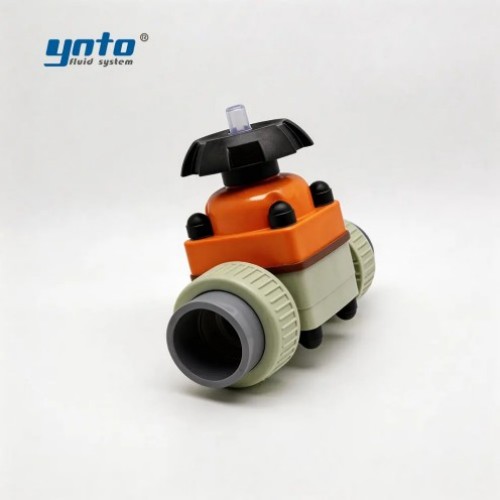
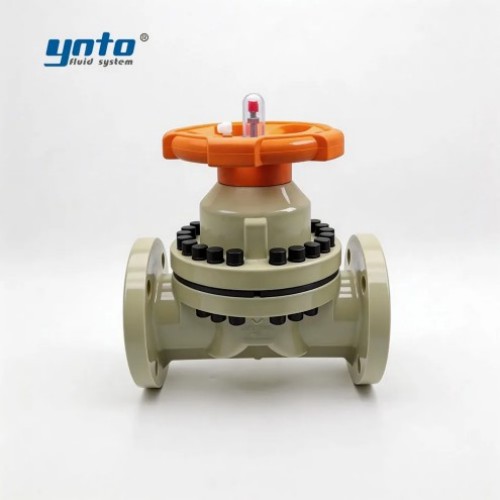
Seals deserve the same level of attention. PTFE and PTFE-faced diaphragm constructions are attractive where heat, chemical cleanability, and non-stick behavior matter. EPDM remains common where hot water and steam performance are important, while FKM can be useful in selected higher-temperature and chemical-resistance cases, though suitability still depends on the exact media and sanitation chemistry. Duplex or Super Duplex stainless is generally unnecessary for ordinary food product contact, but it can be justified in aggressive brine, chloride-rich utility, or especially corrosive wash environments. Carbon steel and alloy steel still have a place as utility-side materials, especially on steam-service hardware, but they are not the obvious first choice for direct hygienic product contact where cleanability and corrosion control dominate. Where full isolation from the medium is needed, a sanitary diaphragm valve is often the cleaner engineering answer because the diaphragm separates the actuating parts from the process stream. CNYNTO’s sanitary diaphragm valve uses 316L construction, publishes working temperatures up to 150–160°C depending on diaphragm configuration, and is presented for sterile steam, injection water, and food-grade applications.
Energy-Efficient Valve Systems and Operating Cost
Energy efficiency in valve systems is usually won in small increments rather than dramatic breakthroughs. A valve with predictable shutoff reduces unwanted heat transfer. A valve with stable modulation reduces overshoot. A body with lower cleanability burden reduces wash time and chemical use. And a design that can be disassembled quickly shortens maintenance windows, which matters because food lines do not make money while they are open. This is why engineers increasingly prefer automated sanitary valve packages in blending, diversion, and CIP circuits. ISO 5115 frames valve actuation as a system problem, not just a motor selection problem: valve, actuator, and mounting have to be sized and assembled so the package actually performs as intended. ISO 5211 complements that by standardizing part-turn actuator attachment dimensions and torque interface references.
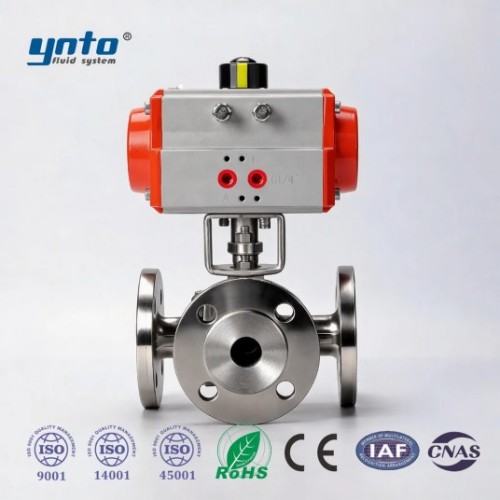
In many field operations, the most efficient layout is not the one with the fewest valves, but the one with the fewest unstable transitions. A three-way valve can simplify routing for product, recirculation, and cleaning media where piping logic would otherwise become bulky. That is one reason hygienic three-way ball valves are routinely specified in food and beverage skids. CNYNTO’s electric 316 stainless steel 3-way clamp ball valve is built around DIN 32676/SMS/3A style sanitary connections, a 316L stainless body, and automated control features intended for PLC/DCS integration. In parallel, their sanitary butterfly design offers quick disassembly and low torque, which can be valuable where operators need frequent inspection access. The commercial value is practical rather than abstract: fewer temperature deviations, fewer sanitation delays, less product giveaway, and a cleaner maintenance routine. That is not a marketing slogan; it is the normal result when the valve stops being the weak point in the line.
Standards and Compliance for Food Processing Valves
Food plants do not select valves on material and temperature alone. They buy against a standard environment. FDA 21 CFR 117.40 establishes the baseline: cleanable equipment, corrosion-resistant food-contact surfaces, materials that can withstand food and cleaning chemistry, and temperature-control instruments that remain accurate. ANSI/3-A sanitary criteria then translate hygienic intent into design details such as smooth surfaces, drainability, bacteria-tight joints, and inspectability. ASME BPE adds another high-purity framework, covering materials, design, fabrication, inspection, testing, and certification for applications with elevated hygienic requirements; ASME notes that BPE includes valve-related content and is built around product purity and safety. When pressure boundary and general industrial service come into the picture, ASME B16.34 remains important because it covers pressure-temperature ratings, dimensions, tolerances, materials, examination, testing, and marking for applicable valves. API 598 is also relevant where buyers want a recognized inspection and leak-testing basis, particularly for utility, steam, and non-sanitary ancillary services. ISO 5211 governs actuator attachment interfaces, while DIN 32676 covers clamp connections for hygienic and aseptic stainless steel components used in food, chemical, and pharmaceutical industries.
Compliance affects selection much earlier than many buyers think. It influences whether you choose a clamp-end sanitary ball valve or a diaphragm valve, whether you specify actuator feedback, whether you require documented surface finish, and whether your seal choice will stand up to both steam and sanitation chemicals. It also affects vendor screening. Some CNYNTO sanitary products explicitly reference combinations such as 3-A, ASME BPE, DIN 32676, and ISO-based actuator interfaces, which can help shorten technical review when documentation matches the actual duty. A useful example for automated shutoff and sterile service is the stainless steel pneumatic diaphragm valve, which CNYNTO presents with 316L construction, ASME BPE and 3-A sanitary positioning, and CIP/SIP-ready use cases. In a regulated plant, that documentation trail is not paperwork for paperwork’s sake. It is part of proving that the installed valve is suitable for pressure, temperature, cleanability, and product-contact risk.
Conclusion
High-temperature resistant valves earn their place in food plants because they solve a cluster of real operating problems at once. They keep product-contact surfaces cleaner, tolerate repeated hot cleaning and sanitization cycles, maintain tighter shutoff under thermal stress, and give temperature control loops a better chance of staying where the process needs them to stay. The engineering logic is simple. If temperature cycling is severe, seals fatigue faster. If seals fatigue, leakage becomes less predictable. If leakage becomes less predictable, sanitation integrity and process stability both suffer. The same pattern applies to pressure instability and torque rise. Small mechanical changes become process-level risks.
For buyers with genuine purchase intent, the right approach is not to ask for a generic “food-grade valve.” It is to specify the product, temperature envelope, cleaning regime, pressure class, required connection standard, and actuation method from the start. In practice, that usually narrows the choice to a few strong candidates: sanitary ball valves for fast shutoff and routing, diaphragm valves where isolation and sterility are critical, and sanitary butterfly valves where low torque and fast maintenance matter. CNYNTO’s sanitary range gives a workable menu across those categories, and the products cited above are the most relevant starting points for a food processor facing high-temperature duty.
- 2026-09-21 15:23:44
- 2026-09-18 09:42:46
- 2026-09-16 09:30:53